
 EN
EN
What lighting type is best for illuminating products on retail displays?
Let us stop beating around the bush and get to the point. If you are still using fluorescent tubes and bulbs that get hot and burn out to light your displays in the retail business, you are losing out. The best lights to use to illuminate products in retail is, without a doubt, LED lights. The effect LEDs have on retail displays is staggering. LED lights, in addition to being aesthetically pleasing, save money over time because of their energy efficiency and their long lifespan.
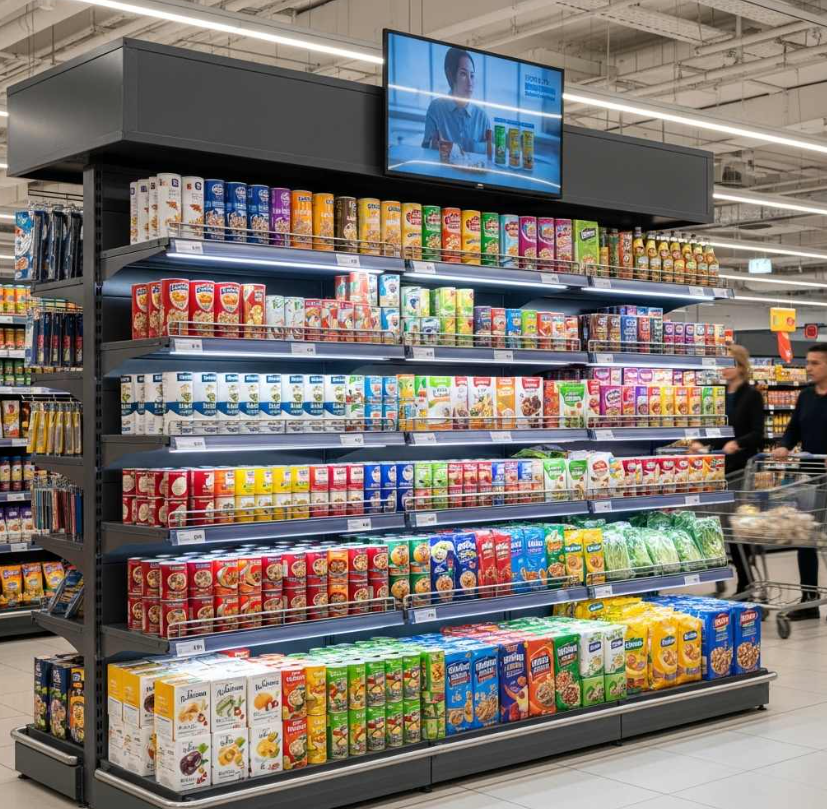
Let us consider a quality spotlight LED. This light uses 80 percent less energy than a halogen spotlight. Selling illuminated products and saving money in the process? The long lifespan of LEDs means that less time and money is spent on updating displays. LEDs can last 25000 to 50000 hours. The best part is the light quality. On LEDs, a high Color Rendering Index is the best option. This means that you are getting the best light on your products. Nothing is worse than products and colors looking washed out.
Mood Lighting Impacts Every Product Category
Things can get really interesting here. Not all products are visually appealing under the same lighting. Different products have different lighting needs. This is the part where we introduce color temperature, which is measured in Kelvins. A diamond ring will look different than a loaf of bread and a smartphone. Warm white light of about 2700 to 3500 Kelvin will have this cozy, inviting effect. This is most suitable for bakeries and coffee shops, decors for homes, and even clothing of natural fabric fibers like wool and cotton. The warm light tones will help people feel quite relaxed.
White light of around 4000 to 5000 Kelvin is referred to as a cool light, and gives a clean and crisp effect. This lighting is most suitable for electronics, automotive parts, tools, and other products where precision and clarity are important. A study indicated that a 4000 Kelvin neutral white color temperature is the best for general retail aisles. It provides a good visibility balance while not being too harsh. For high end jewelry stores, cool white lighting in the 5000K to 6500K range is best for making diamonds shine like crazy. One of the most important tips is to avoid mixing different color temperatures in the same display area. It visually confuses people, and gives a very unprofessional look to your store. It is best to choose a single color temperature for each display area and avoid mixing.
CRI or Color Rendering Index How Poor or Good Lighting Affects Merchandise
Have you ever walked into a retail store and felt something was off about the merchandise? Maybe the clothing appeared unattractive or the produce looked unappetizing and spoiled. A likely reason that this occurs is poor lighting with a low Color Rendering Index. The Color Rendering Index uses sunlight as a benchmark and determines how well a light source exhibits colors. Sunlight scores a perfect 100. A CRI of above 90 is ideal for retail displays. Anything lower diminishes the true value and colors of merchandise.
Consider this example. A red apple with a CRI of 70 will look brown and unappetizing. In comparison, the same apple with a CRI of 90 plus will look deliciously bright and red. Even without knowledge of CRI, customers notice the difference. Their instincts signal what display looks more appealing. Some systems state that, for selling fabric, a CRI of 95 and beyond is nearly obligatory for true representation of colors. A higher CRI is even necessary for lighting in retail makeup stores because consumers are required to view exact shades of makeup before purchasing. It is recommended that you look for retail display lighting that is above 90. Use CRI 95 if accurate color representation is crucial for the sale of your merchandise.
Your Flexibility Is Enhanced with Track Lighting Over Permanent Installed Lighting
Lighting in stores is generally an afterthought. Many permanent installed fixtures are used in a retail environment. True, lighting has a lot to do with how customers perceive the space, but in a store, lighting is most important for illuminating the products. Change a product? Change the display? Why not change the lighting? Lights that are rigidly installed into the ceiling can damage the display because they cannot be adjusted. This is where a permanent installed lighting system is the wrong choice. Track lighting systems provide multiple lighting heads that can be adjusted. Retail lighting heads can be moved all along a ceiling rail and aimed in any direction to get the light exactly where it is needed.
This means that all seasonal displays and special promotions can be lit with minimal effort. Simply reposition the light heads, reaim, and retighten to a new display. Helplessly cutting new holes in the ceiling is not needed. Retail lighting systems need to be toggled and used repeatedly. Track lighting can be used with narrow beam spot lighting that is 15 to 30 degrees to light a single product. A 60 degree beam flood light for covering wider areas can be used in integration. This allows ultimate flexible control for systems that change regularly in a busy retail environment.
LED Lights on Shelves Eliminate Shadows
We have persuaded many a customer via our eye catching display and design elements, but one of our not so secret design elements is just a standard LED light. Out of sight, of course. Near our top shelf displays, we have LED light strips above, and display lighting that is more focused below. Not only do our top shelves shine, so do the products on the bottom shelves. Out of sight products and bottom shelves are not an issue.
You should do the same. Clearly illuminate every level of your retail display. No dark corners and no hidden products. You will have quality, even lighting throughout your display. LED strips are perfect for this because they are super thin. Many strips have an adhesive back that allows for easy and quick installation. One of our store favorite display techniques is using magnetic strips. This allows for the brightest and most optimal lighting configuration, and they can be readjusted to match your display. The hidden lighting approach adds a clean, modern look to your display. You will have brilliant, professional, and eye catching displays.
Improved Lighting Technologies Lead to Increased Store Sales
The purposeful changes in store lighting and their sales impact have been the subject of lengthy discussions. Lighting promotes sales and displays products better. One such case involved a trademarked denim brand with numerous outlets and multiple products. The store made analytics driven changes to its sales dedicated lighting and tracked changes in lighting and sales performance at each store. The results yielded a jaw dropping increase of 44 percent in sales. The conversion rate increased by almost 4 percent and sales per shopper increased by 21 percent. These are real metrics as a result of a real case study.
A fresh berry retailer also used lighting to improve sales in their vertical refrigerated displays. Using Visual Attention Analysis technology, the retailer identified the negative impact the poor lighting was having on sales. The change in the type of LEDs to a more appropriate one and the color temperature of the lighting improved berry sales by 22 percent in just three months. In the same stores where the lighting was not improved, sales only grew by 10 percent during the same time. It was the impact of better lighting on retail displays. So the next time someone tells you that store lighting does not matter, remember the case studies.
Combining a Variety of Different Types of Lighting Adds Dimension and Excitement
Consider how superb retail lighting looks in displaying a product. They consider layers. Think of lighting in a similar way to a picture. The first layer is ambient lighting. This is the lighting that fills the space a retail store surrounds customers with. This lighting should be even and soft so it is uniform across the store's surfaces. It should not be glaring. The next layer is task lighting that accommodates the lighting of staff specific duties. But where do products really explode? Accent lighting.
Accent lighting is front lighting that highlights a specific product on the display rack. Front lighting is most useful when it comes to creating a spotlight effect that makes something stand out. Lighting should create contrast with surroundings so that the product really pops. When products are on end caps, customers are far more likely to notice and engage with them. Pairing ambient fill lighting with accent lighting creates retail displays with depth and dimension. The store looks polished and products appear more luxurious. Some establishments add a supplementary layer of decorative lighting. Elements like a touch of color or soft glowing strips. The focus of these layers needs to be on having the products and displays be the stars of the show.
Final Tips on Lighting Retail Displays
The process of picking lighting for retail displays should be straightforward. Lighting for retail displays should be LEDs. They last forever, are energy efficient, and produce a high quality spectrum of light. The lighting should be a specific color temperature, with warm whites around 3000 Kelvin and neutral whites around 4000 Kelvin. Always go with a CRI above 90, and a higher one if that comes within budget. Install track lighting for versatility. Use LED strips to light different shelf levels and to minimize shadows. Lighting is an investment that pays for itself with better sales and unique displays. If your displays look new but unexciting, lighting will likely be the main issue.