
 EN
EN
Avoiding Five Common Quality Pitfalls When Choosing Retail Clothing Display Racks
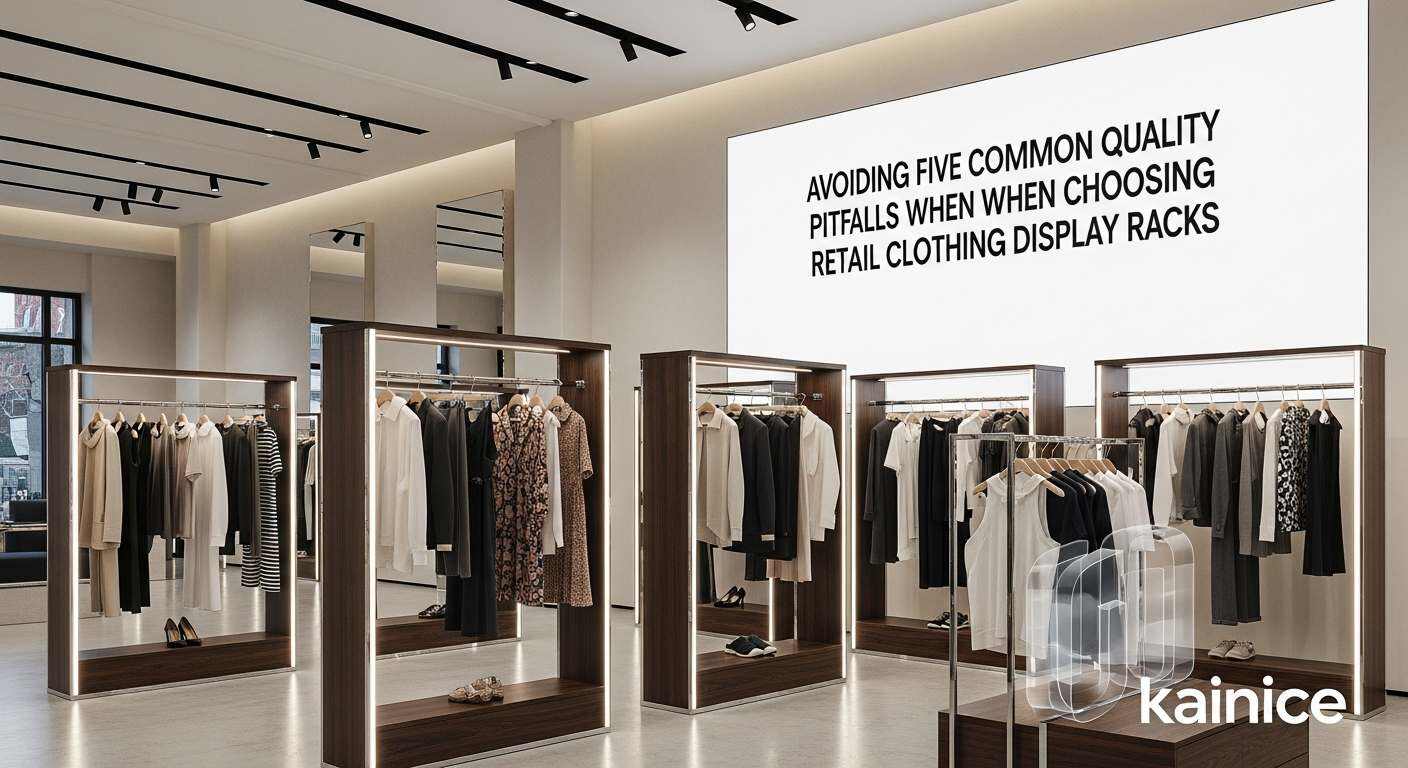
In the apparel retail industry, customers experience more than just the clothes they see; they experience the entire store environment. Many retailers spend their budget on high-end lighting and flooring, but then "save money" on the shelving used to display merchandise – a strategic mistake. High-quality shelving can increase customer trust. Before signing a purchase order, here are five of the most dangerous quality pitfalls commonly encountered by buyers when choosing high-quality shelving:
Trap 1: The Illusion of "Heavy Duty" and Hidden Insufficient Steel Thickness
One of the most common mistakes retailers make is failing to verify the actual technical specifications of the materials. In manufacturing, the quality of materials used is crucial. Many low-cost suppliers use thin-gauge metal and make it appear sturdy through polishing or painting. These display racks will tilt or collapse under excessive weight. Before making a bulk purchase, ask about the maximum weight capacity per foot of the clothing display rack and ensure it is at least 20% higher than your heaviest inventory requirements.
Trap 2: The Nightmare of Surface "Peeling"
Surface treatment is extremely important for clothing display racks, as it greatly impacts the customer experience. Whether it's chrome plating, powder coating, or brushed brass, these are areas where clothing display racks are prone to problems.
Sacrificing durability for aesthetics is a typical pitfall for clothing display racks. High-quality retail clothing display racks should use high-micron powder coating or electroplating processes, and this coating or plating should be specifically designed for "high-friction" environments. When making bulk purchases, require the manufacturer to provide a friction resistance rating to prevent increased costs due to quality issues.
Trap Three: Poor Welding Quality
When inspecting clothing rack samples, pay close attention to the welding quality. Low-cost manufacturers often use spot welding, which can lead to weld problems. When the racks are moved, the welds may break, posing a potential safety hazard and serious risks to customers and employees.
Trap Four: Poor Mobility Design of Clothing Display Racks
Mobility is crucial for clothing display racks in the retail industry. Retailers often choose racks with wheels for quick store relocation. Casters are an area wholesalers need to be wary of. Some manufacturers use cheap plastic casters, which often get stuck or develop flat spots after a period of use, making the racks almost immobile and sometimes even scratching your floor.
When purchasing clothing display racks, choose professional-grade racks. Professional-grade racks should have non-marking rubber or polyurethane wheels with industrial-grade swivel bearings to prevent scratching your floor.
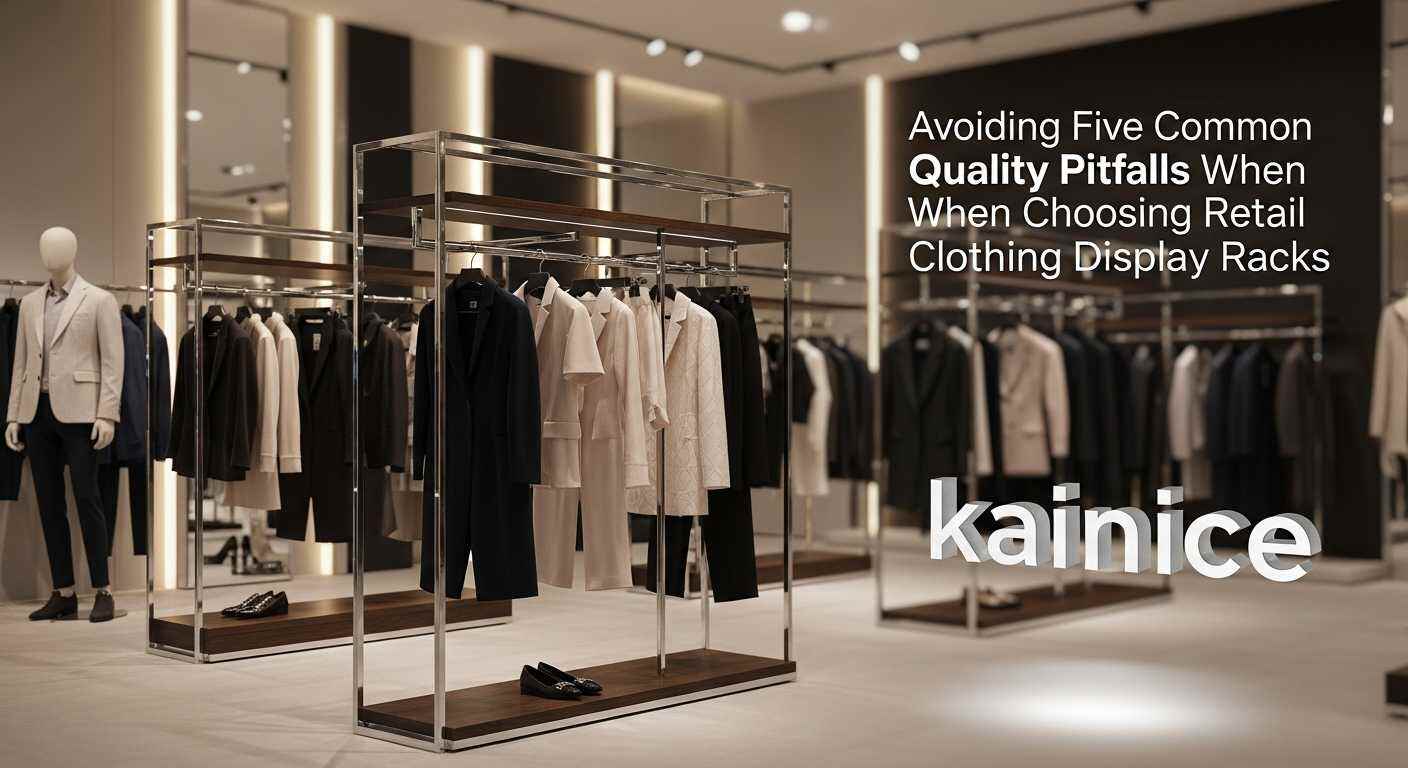
Trap Five: Complex Assembly Process
Assembly and maintenance are also important aspects of display rack quality. Some clothing display racks require specialized tools for installation and adjustment, which can be fatal for retailers.
When purchasing in bulk, it is best to choose clothing retail display racks with a "bolted connection" structure or a simplified modular design. Also, check that standard hardware is used, as high-strength hardware can ensure that your display racks can be used for a longer period of time.
For retailers, shelves that cost 30% more but last three times longer represent the true path to "low-cost" operations.
Our company has dedicated years to finding the balance between aesthetics and industrial durability. Our retail clothing display racks undergo rigorous testing to ensure they withstand the demands of high-traffic retail environments and remain pristine.
Are you planning a new store opening or seasonal renovation? Contact our team today for customized clothing display equipment consultation.