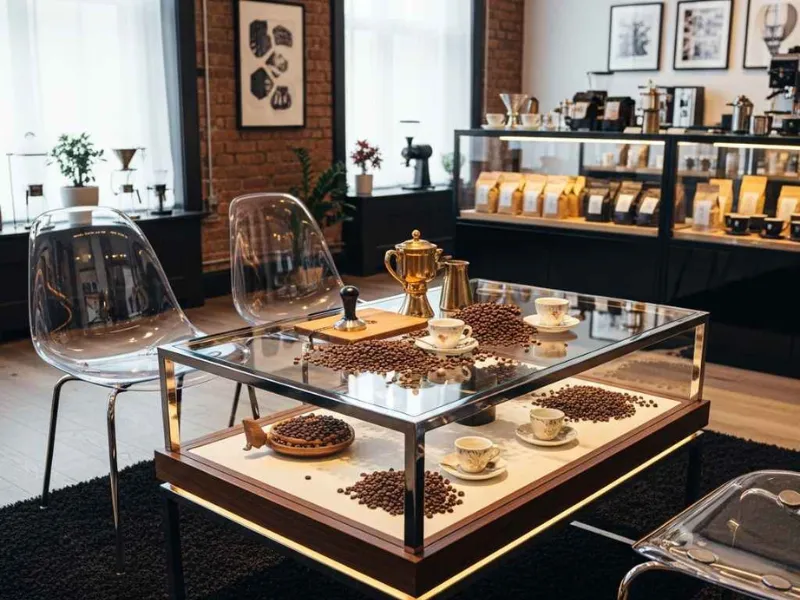
Walking into a successful retail store feels effortless. The journey from the entrance to the checkout is natural, almost intuitive. Yet, this seamless experience is the result of meticulous planning—a comprehensive display strategy that consciously guides customers through distinct zones, each with a specific mission. For brands managing a consistent image across multiple locations, this zonal strategy is the key to transforming a shop floor into a compelling commercial narrative. This is not about placing fixtures randomly; it’s about architectural storytelling with products. Let’s explore this strategy zone by zone to captivate customers and maximize impact.
Planning Stage: The Customer Journey as Your Blueprint
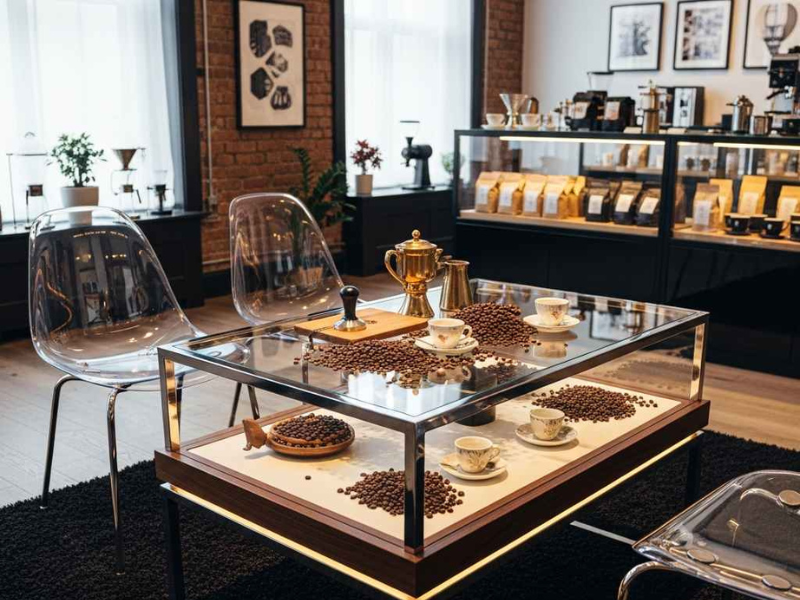
You cannot design an effective store without first planning the customer journey. Map the path from a customer’s first interaction with your brand to their final purchase. This journey naturally segments the store into different zones: the Entry & Greeting Zone, the Core Exploration & Engagement Zone, the Decision & Transaction Zone, and often, a Discovery or Perimeter Zone. Each zone aligns with a different customer mindset and requires a unique set of retail displays and tactics. The goal is to facilitate an emotional and physical progression, using display as the primary navigation tool. This strategic approach ensures every part of the store is thoughtfully designed to build brand aura, educate, or drive sales.
The Entry Zone: First Impressions and Brand Theater
The first ten feet inside the door are your brand’s handshake. This zone prioritizes impression and introduction over immediate sales. It’s where customers subconsciously decide what your brand represents.
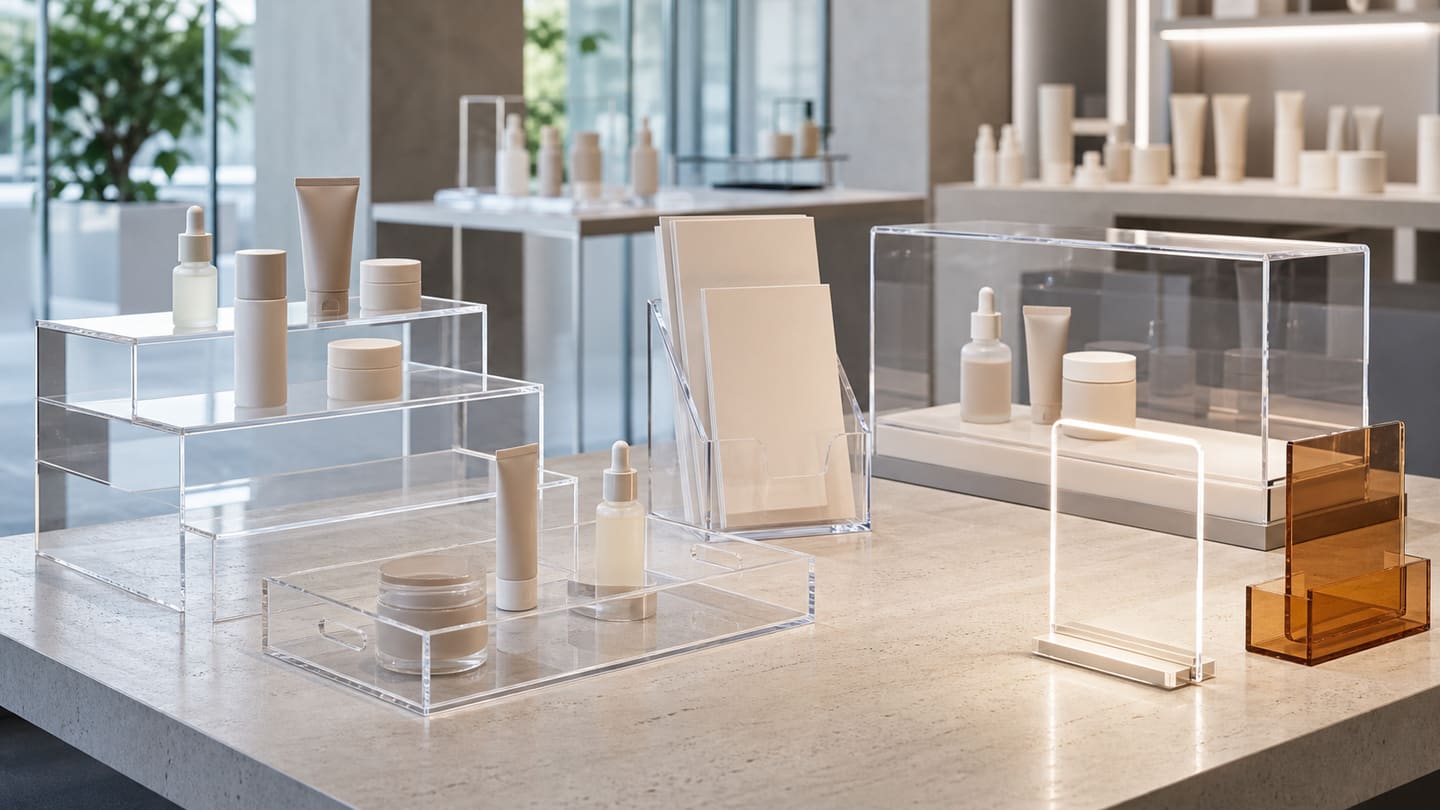
Consider this your brand theater. Utilize large-format, eye-catching displays that communicate your brand story instantly—through lifestyle vignettes, artful installations of flagship products, or digital screens with evocative imagery. Fixtures here are less about high-density storage and more about sculptural impact. The quality of materials—be it fine wood, custom metalwork, or flawless acrylic—communicates value before a product is even touched. Customers notice and appreciate these details. This zone builds the aspirational halo that makes everything else in the store more desirable.
The Core Engagement Zone: The Heart of the Story
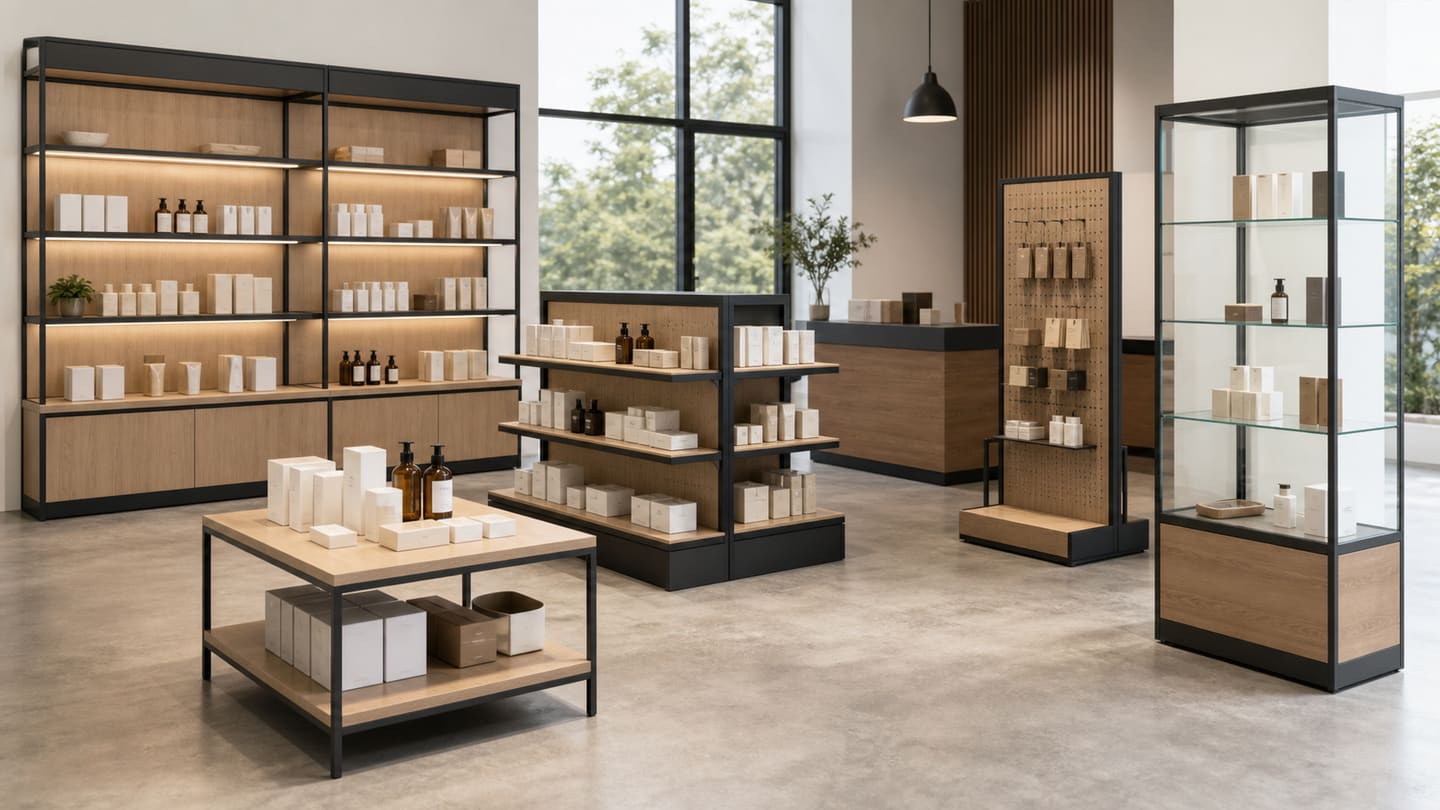
This is the main stage of the store, typically comprising central gondolas, wall systems, and feature areas. The customer is now engaged, browsing, and comparing. The display strategy shifts from atmosphere to organization, education, and persuasion.
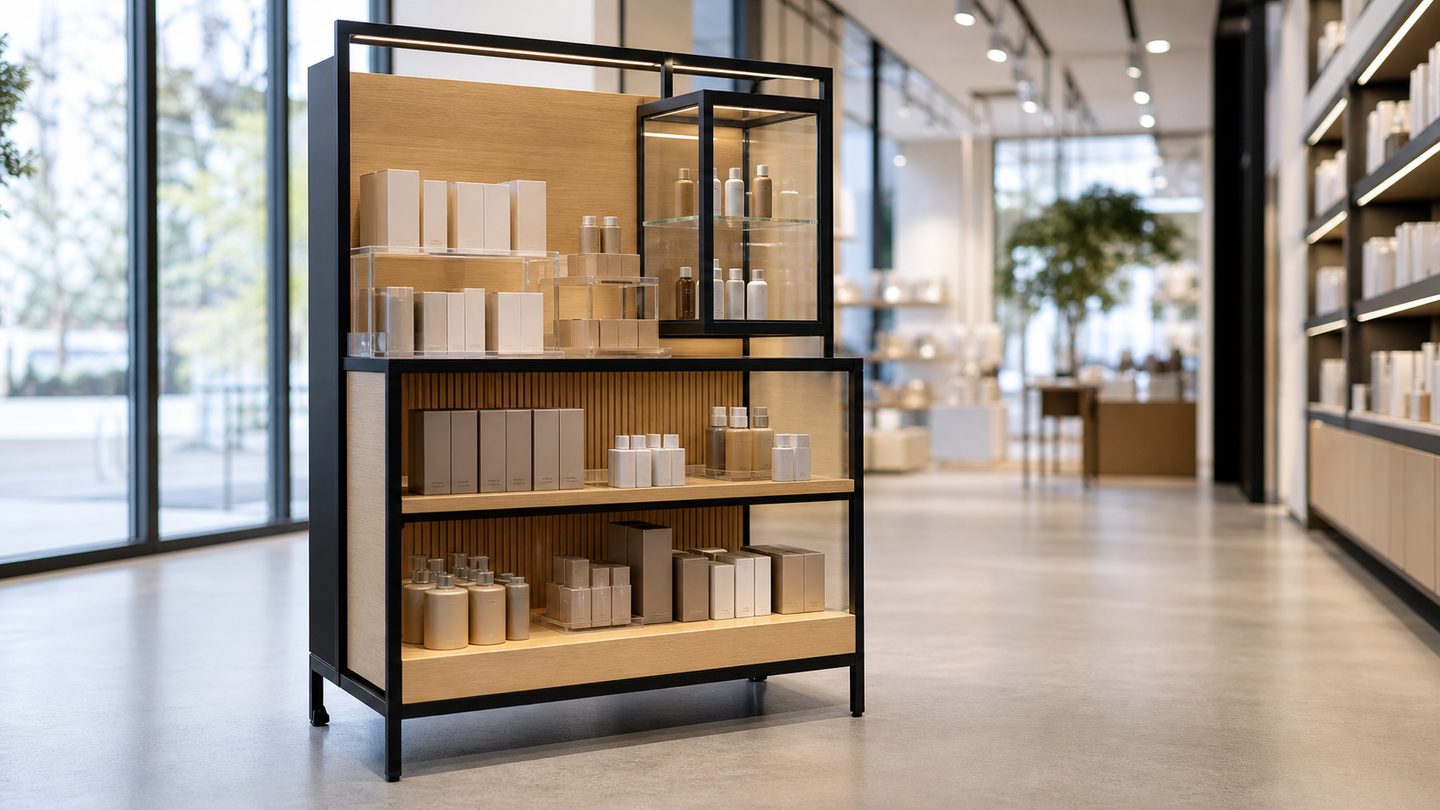
Here, functionality and flexibility reign supreme. Your retail displays must be masters of logic and accessibility. This is where modular systems prove their worth. Gondolas with adjustable shelves, peg hooks, and integrated signage allow for clear category merchandising. Wall displays create a sense of abundance and order. The strategy involves creating “moments”—a featured end-cap promoting a new collection, a cross-merchandising display showing complementary products, or an interactive tester station. Lighting becomes critical, shifting from ambient to focused accent lights that make products pop. Material choices must support both durability for high traffic and a tactile feel that invites interaction, such as warm woods for apparel or cool, precise metals for electronics.
The Transaction Zone: The Final Nudge and Future Relationship
Often overlooked, the area around the checkout is a goldmine for incremental sales and relationship building. The customer’s mindset here is transitional—they’ve made their primary decision but are often open to last-minute, low-commitment additions.
The display strategy revolves around convenience and impulse. Countertop displays, slim-profile spinner racks, and small, attractive bins are key. These fixtures must be compact, incredibly sturdy for constant handling, and designed for easy restocking. They typically hold samples, promotional add-ons, or low-cost, high-margin impulse items. Furthermore, this zone can host displays that facilitate membership sign-ups or promote digital channels via QR codes. The finish must remain high-quality for close-range handling, but the design should be straightforward and efficient for both customers and staff.
The Discovery and Perimeter Zones: Encouraging Exploration
For larger stores, the walls and outer aisles form a perimeter path. This zone is ideal for telling deeper product stories or showcasing categories that benefit from relaxed browsing, like premium collections or seasonal items.
The strategy leverages the store’s own architecture. Walls become powerful canvases for immersive displays. Custom shelving systems, integrated lighting, and built-in cases can transform a blank wall into a gallery for your best merchandise. In open areas, feature tables or low-profile floor displays can create destinations that encourage customers to explore every corner. Displays here can be more specialized and less densely packed, focusing on creating an exclusive, informative environment that invites customers to linger and discover.
Achieving Cohesion: The Role of Unified Design and Manufacturing
A zonal strategy risks feeling fragmented without strong cohesion. This is where Store Image (SI) discipline and manufacturing partnership become critical. Cohesion is achieved through a consistent design language across all zones. This means using a harmonious material palette—perhaps the same metal finish on the entry sculpture, gondola uprights, and countertop stand. It involves repeating signature design elements, like a specific angle or graphic motif, across fixtures of all sizes.
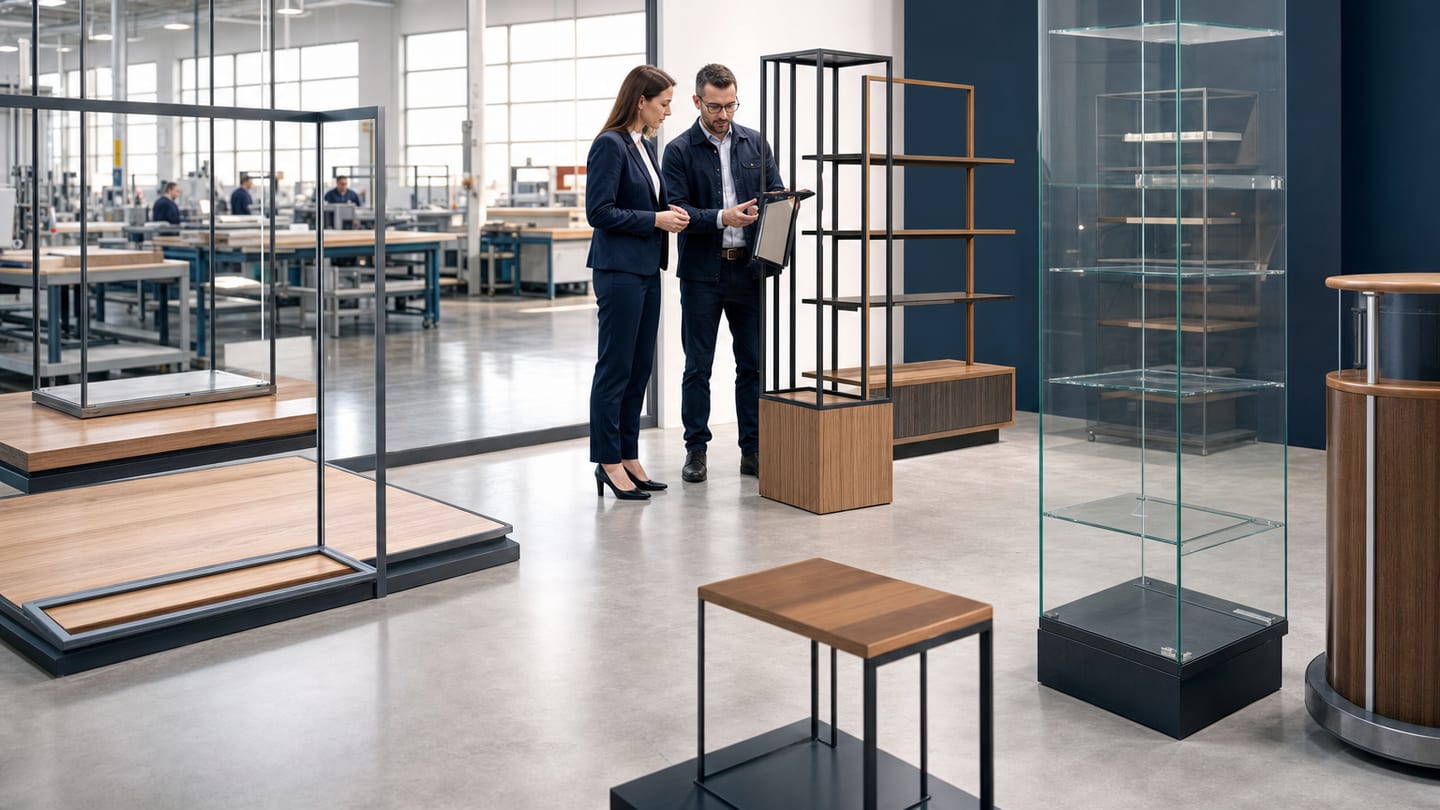
Executing this vision at scale, especially for global chains, requires a manufacturing partner with both breadth and depth. The ideal partner can produce a grand, custom entry piece in a specialized workshop while also manufacturing hundreds of identical, perfectly uniform gondola components on an automated rolling production line. Their quality management system must ensure that the finish on a small acrylic sign holder in Zurich matches the large wall system in Tokyo. This end-to-end control is what makes a comprehensive, cohesive strategy logistically possible.
Measuring, Adapting, and Evolving
Finally, a modern display strategy should be dynamic, not static. Use data—from sales per square foot in different zones to customer heat maps—to understand what works. Be prepared to adapt. The beauty of a well-planned modular display system is its inherent flexibility. Seasonal changes, new product launches, or performance insights can prompt rapid reconfigurations without a complete overhaul. The most sophisticated strategies now integrate smart elements, like digital screens with remotely updatable content or interactive displays that gather engagement data, ensuring your physical retail displays remain as dynamic as your brand.
Developing a display strategy is like directing a play where the store is your stage and the fixtures are your sets. By understanding the unique role of each zone and meticulously designing displays to fulfill those roles, you create a compelling, cohesive journey. It is this strategic choreography of space, product, and experience that converts casual browsers into loyal customers and transforms retail space into definitive brand territory.