
 EN
EN
Choosing between floor stands and countertop stands for product promotion.
Your product is ready for launch, and your marketing strategy is set. Now comes a critical decision: how will you physically present it to customers in-store? Selecting a floor stand or a countertop stand is more than just picking a piece of store furniture. It's a strategic choice that impacts product visibility, customer interaction, and brand perception. For brands collaborating on global store rollouts, this decision can significantly influence a campaign's effectiveness. This article will simplify the complexities of this choice to help you select the perfect partner for your product promotion.
First Consideration: Your Marketing Goal and Available Space
Before diving into specifications, start with a fundamental question: What must this display stand achieve? Is its purpose to announce a new product from across the room, or to create a personal, tactile experience at the point of sale? Your goal dictates the design.
-
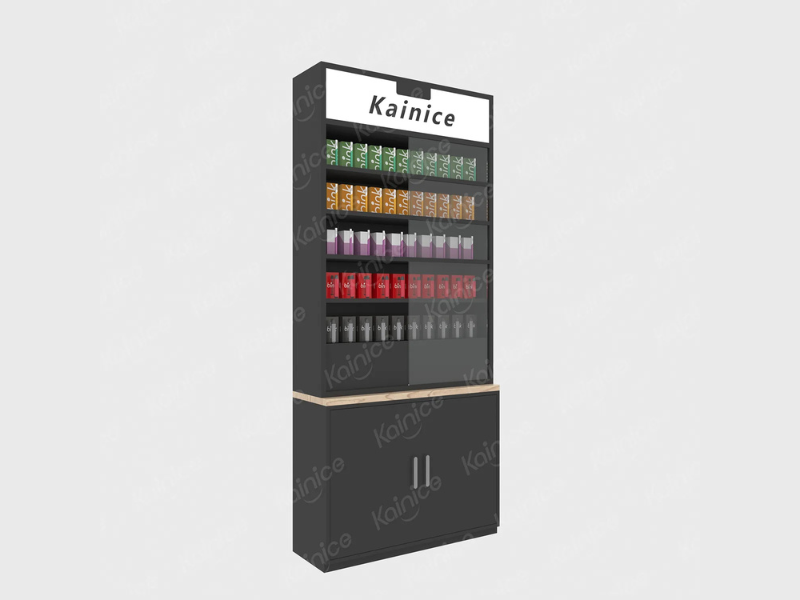
The Commanding Presence (Floor Stands): Choose a floor stand if your goal is high-impact visibility and drawing customers to a specific area. Think of them as miniature billboards or destination points. They command substantial floor space and are designed to stop traffic, making them ideal for new collections, seasonal promotions, or large items.
-
The Focused Engagement (Countertop Stands): Opt for a countertop stand if you aim to complement a sales transaction, drive add-on purchases, or highlight smaller, high-value items. It operates within the customer's personal space—at the cash wrap, on a consultation table, or alongside related products—facilitating a closer look and a quicker decision.
This initial strategic filter, considering the customer journey and store layout, guides all subsequent decisions on design, capacity, and production.
Maximizing Impact: Space, Height, and Capacity
The physical dimensions of your chosen stand are its most obvious differentiators and are paramount in the planning process.
Floor stands are defined by their substantial footprint and vertical reach. Designed to optimize valuable floor space, they feature larger bases for stability and structures that can extend from eye level to well above it. This allows for large branding panels and multiple product tiers. Their capacity is a major advantage, often holding dozens of items to create a complete promotional hub. Partnering with a manufacturer experienced in structural engineering is crucial here to ensure the stand is robust, stable, and safe in high-traffic areas.
Countertop stands, in contrast, excel in confined spaces. Their design prioritizes a minimal footprint to avoid cluttering valuable counter or shelf space. Their height is limited to remain within a customer's immediate sightline during engagement. Capacity is more curated, typically holding a select few items or a single focal product with complementary accessories. These units require exceptional manufacturing precision—they must be compact yet sturdy, with fine details and finishes that withstand close inspection. This demands specialized capabilities in precise metal bending, acrylic fabrication, and flawless finishing.
Design and Material: Telling Your Brand Story
Both stands act as three-dimensional brand ambassadors, but they communicate from different distances, making material and construction quality imperative.
A floor stand, viewed from afar, needs to make a bold stylistic statement aligned with your brand's image. This could involve powder-coated metal in a brand color for a modern feel or large-format graphics for immediate messaging. The choice of materials—industrial-grade steel, warm finished wood, or sleek acrylic—supports the brand narrative on a macro scale.
A countertop stand is experienced intimately. Customers will touch, pick up, and scrutinize it. Here, material tactility and exquisite finish are critical. A luxury cosmetics brand might use a stand with a soft-touch paint finish, beveled edges, and integrated silicone pads. A tech brand might opt for precision-machined aluminum with a brushed anodized finish. Producing this level of detail requires a manufacturer with specialized, segregated production lines: high-volume metal fabrication for floor stands, and fine woodworking, laser-accurate CNC machining, and pristine finishing lines for delicate countertop units.
Interaction and Conversion: The Customer Experience
The stand's format dictates the desired customer interaction.
Floor stands are fantastic for discovery and browsing. They invite customers to walk around, explore a range, and interact with demo products. They effectively drive traffic to a specific location and create a sense of abundance around a promotion.
Countertop stands excel at guiding the final decision. Positioned next to the cash register or on an advisor's station, they provide the final nudge for an add-on purchase. They can hold testers, pamphlets, or small impulse-buy items. Their success lies in being intuitive and accessible without being obstructive. A well-designed countertop display stand feels like a natural part of the service experience.
Making the Strategic Choice: A Practical Guide
Still unsure? Consider these common retail scenarios:
-
Choose a Floor Stand when: Launching a major new product line in a supermarket aisle; creating a seasonal gift destination in a department store; displaying a shoe or handbag collection; or whenever you have ample floor space and need to make a loud, clear statement.
-
Choose a Countertop Stand when: Promoting a new lipstick shade at a beauty counter; showcasing premium smartphone accessories; displaying recipe cards near kitchenware; or when you need to integrate seamlessly into an existing service flow to capitalize on last-minute purchase decisions.
For many brands, the most powerful strategy is a combination: a commanding floor stand to draw attention and a refined countertop stand to clinch the sale, creating a cohesive promotional journey.
The Future of Display: Integration and Intelligence
The evolution of both stands points toward smarter integration. Imagine a floor stand with integrated digital screens that update content remotely, or a countertop stand with NFC tags for instant access to reviews and information. The next-generation display stand is not passive; it's an interactive touchpoint. Partnering with a progressive manufacturer that has in-house R&D and expertise in integrating electronics (like LEDs or sensors) with traditional craftsmanship is key to leveraging these trends. This ensures your investment supports not just today's campaign but is adaptable for tomorrow's retail innovations.
Conclusion: It's About the Right Tool for the Job
Ultimately, the choice between a countertop stand and a floor stand isn't about which is better. It's about selecting the right tool for your specific retail strategy. The floor stand is your crowd communicator—attention-grabbing and impossible to miss. The countertop stand is your one-on-one conversationalist—persuasive, personal, and perfectly timed. By carefully considering your goals, space, and desired customer interaction, you can choose a display solution that doesn't just hold your product but actively promotes it. A manufacturing partner that masters the full spectrum of production—from large-scale metal fabrication to micro-precision finishing—will ensure your chosen stand is built to the highest standard, perfectly embodies your brand, and effectively drives sales.